
Paying for managers: the coaching transfer market today
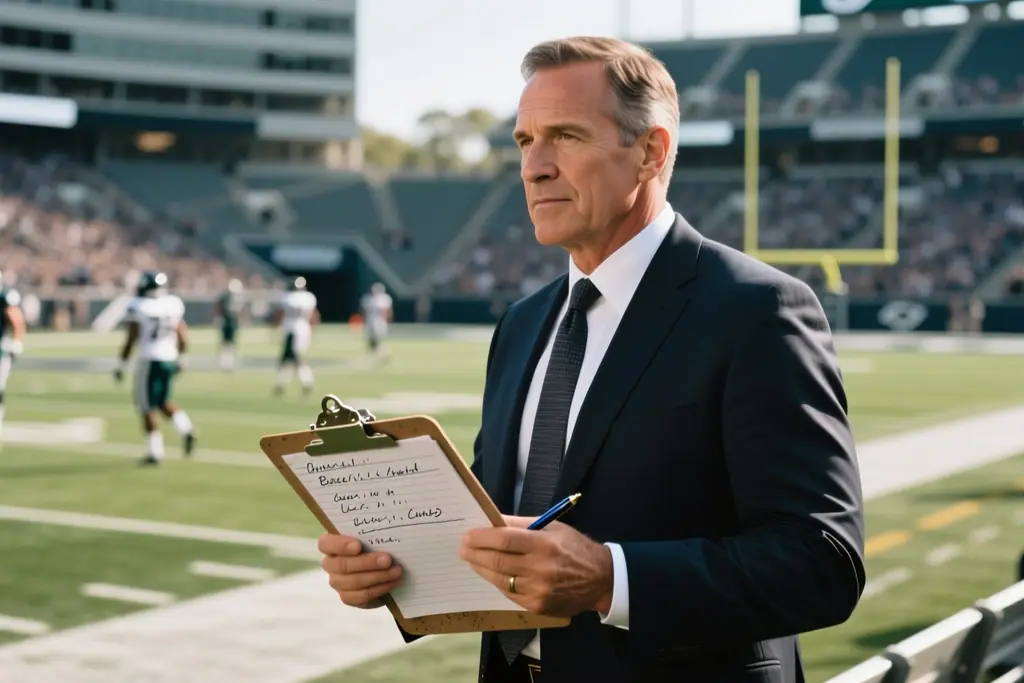
Managers move between clubs for money too. When a club signs a coach who is still under contract elsewhere, it pays compensation to the club that holds that contract, and the largest such payments now rival mid-sized player transfers in value.
Compensation, not a fee
A manager transfer is not a fee for the person. It is compensation paid to the club that holds the coach's contract, which is why the payment is released only with that club's agreement and can be refused outright.
If the coach is out of contract, no compensation is due at all. The distinction matters because it makes the coaching market far more dependent on contract timing than the player market, where a fee can secure a player mid-contract.
| Feature | How it works |
|---|---|
| Under contract | Compensation paid to the club |
| Out of contract | Free appointment, no payment |
| Fixed clause | A payment triggers release |
| Largest payments | Tens of millions of euros |
| Timing | Clusters around contract expiry |
The largest payments
The largest managerial compensation payments on record are in the tens of millions of euros. They are typically paid when a wealthy club takes an established coach from another club in the middle of a contract.
These sums are small beside the player record, but large beside an average player transfer, and they show that the market prices coaching as a scarce and valuable input rather than a cost to be minimised.
Why clubs pay
A club pays compensation because it believes a particular coach will improve results faster than any available alternative. The payment buys certainty of appointment rather than the registration of a player.
The economics are simple: if a coach is expected to be worth more than the compensation in improved league position or qualification revenue, the payment is rational even at tens of millions of euros.
The essentials
- Manager moves involve compensation, not a transfer fee
- Compensation is paid to the club holding the contract
- The largest payments reach tens of millions of euros
- Some contracts include a fixed compensation clause
- Appointments cluster around contract end dates
Release clauses for coaches
Some coaching contracts contain a compensation figure, which works like a release clause for a player. When a buying club meets that figure, the coach is free to move without further negotiation.
Coaches without such a clause can be blocked by their employer, which is why the structure of a coaching contract often matters as much as the coach's reputation and record.
The coaching carousel
Managerial change is frequent, and each change either pays compensation or waits for a contract to expire naturally. The pattern creates a carousel in which clubs carefully time their moves around contract end dates.
That timing effect is visible in any ledger of coaching changes: appointments cluster in the close season and at the precise moments when contracts lapse and compensation falls to zero.
Reading the coaching market
The coaching market is smaller and more timing-dependent than the player market, but it follows the same logic of scarcity and contract. The best coaches are few, and the clubs with money compete for them.
Its records belong beside the player records because they measure the same underlying thing: what a club will pay to secure a scarce person who can plausibly change its results.
The difference is that coaching talent is even scarcer than playing talent. A club can find a competent midfielder in a hundred places, but truly elite coaches number in the dozens worldwide, which is what keeps their compensation high.
For a reader of the market, the coaching ledger is a useful cross-check on the player ledger. When compensation for coaches rises sharply, it usually signals that club revenues are rising too, and player fees tend to follow that signal within a season or two.
The coaching market is a small, sharp-edged version of the player market. Its largest payments are a useful reminder that clubs are ultimately buying results rather than registrations.